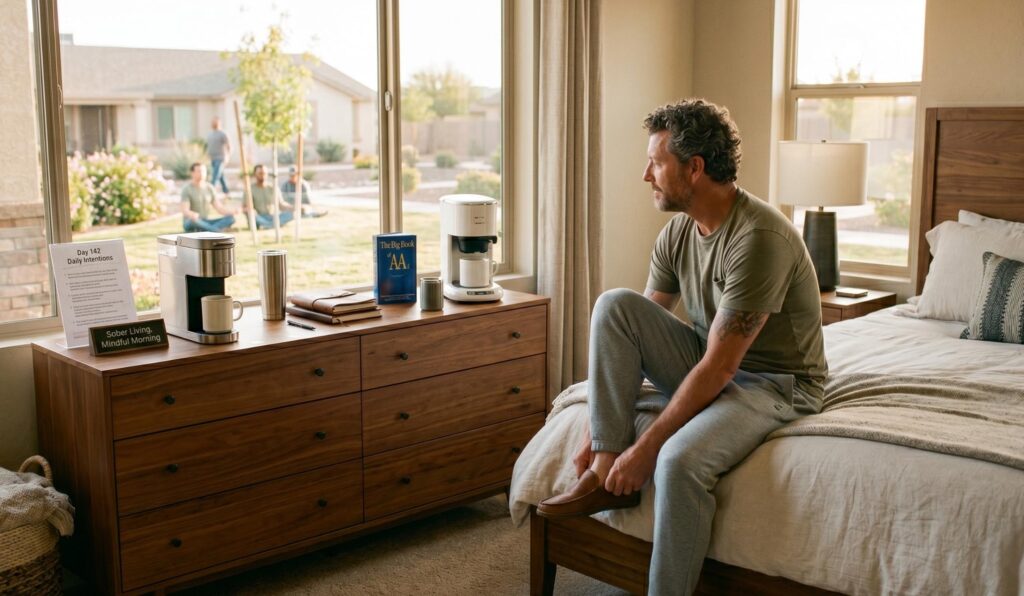

Recovery does not end when treatment ends. For many men, the transition back into everyday life brings new responsibilities, more freedom, and fewer built-in supports. A sober living home can provide the stability needed to manage that transition with greater confidence.
The benefits extend far beyond having a place to stay. Sober living can help you strengthen routines, rebuild accountability, connect with supportive peers, and prepare for greater independence. It gives you a substance-free environment where recovery remains part of daily life while you take on more responsibility for your own decisions.
At Sunset Ridge Sober Living, we believe the strongest sober living environments balance structure with independence. Residents share a home, follow clear expectations, and participate in a community built around respect, accountability, and personal responsibility.

A Safe and Stable Foundation
A stable home can make a meaningful difference during recovery. Returning to a chaotic environment, unhealthy relationships, or easy access to substances can create unnecessary pressure during an already demanding transition.
A sober living home creates a different setting. Residents agree to maintain sobriety, respect house expectations, and contribute to the stability of the household. That consistency can make it easier to focus on work, meetings, relationships, and other responsibilities without constantly managing avoidable disruptions at home.
The Substance Abuse and Mental Health Services Administration identifies recovery housing as an important support that can provide safe, stable environments for people working to sustain recovery. Stable housing does not guarantee sobriety, but it can create conditions that make healthy routines and responsible choices easier to maintain.
Structure That Helps Build Discipline
One of the greatest benefits of sober living is having clear expectations while you regain independence. House rules, curfews, shared responsibilities, and recovery-related commitments can create a predictable framework for daily life.
This structure is not meant to control residents. It helps reduce uncertainty and encourages follow-through. You know what is expected, which makes it easier to build habits around work, household responsibilities, meetings, appointments, and personal goals.
Over time, external structure can become personal discipline. You begin getting up on time because it supports your day, not simply because someone expects it. You complete responsibilities because they have become part of how you live.
A Substance-Free Environment
Living in a substance-free home removes one major source of uncertainty from everyday life. You do not have to wonder whether alcohol or drug use will become part of the environment around you.
That boundary matters because home should support the direction you are trying to take. Residents share a basic commitment to sobriety, even though each person may have a different recovery history or path.
A substance-free residence cannot remove every trigger or difficult situation. It does give you a stable place to return to after work, meetings, appointments, and everyday stress.
Peer Support Through Shared Experience
Living with other men in recovery creates opportunities for support that happen naturally. You may talk with someone over dinner, hear another perspective after a difficult day, or notice how another resident handles a challenge responsibly.
That shared experience can reduce isolation. You do not have to explain every part of recovery to people who already understand many of its challenges.
Peer support also works both ways. As you become more stable, your experience may help someone else. Encouraging another resident can strengthen your own sense of responsibility and remind you that your actions affect the community around you.
Accountability That Encourages Responsibility
Accountability is a central part of sober living. Residents are expected to follow house rules, complete responsibilities, communicate clearly, and take ownership when something goes wrong.
Healthy accountability is not about punishment or humiliation. It is about helping residents remain honest about their choices and follow through on commitments.
Living around other people makes behavior more visible. If your routines begin changing or responsibilities start slipping, someone may notice. That visibility can create an important opportunity to address problems early instead of allowing them to grow.
More Time to Build Healthy Routines
Treatment often provides a structured schedule, but everyday life requires you to create your own. Sober living gives you time to practice routines before moving into complete independence.
That might include:
- Waking up and going to bed at consistent times
- Getting to work or school reliably
- Attending recovery meetings or outside services
- Managing meals, exercise, and personal care
- Keeping your living space clean
- Completing household responsibilities
- Managing appointments and transportation
- Building healthy ways to use free time
Repeated routines create familiarity. The more consistently you practice them, the easier they can become to maintain when nobody else is providing daily structure.
A Gradual Return to Independence
Moving directly from a highly structured program into complete independence can be a significant change. Sober living creates an intermediate step.
You gain more control over your schedule while still living within clear boundaries. You can work, attend meetings, pursue goals, rebuild relationships, and manage everyday responsibilities.
This gradual transition gives you space to make decisions and learn from them. You are not expected to have every part of life figured out immediately. Instead, you practice independence while maintaining access to a stable home and supportive community.
Opportunities to Rebuild Confidence
Confidence often returns through action rather than reassurance.
You go to work when you say you will. You pay a bill on time. You complete a household responsibility. You handle a difficult conversation without walking away from it.
These small successes matter because they show you what you are capable of doing consistently. Over time, that evidence can strengthen your trust in yourself.
Sober living provides repeated opportunities for these moments. The home gives you structure, but you are the one completing the work.
Practice Managing Everyday Responsibilities
Independent life involves countless ordinary responsibilities. Groceries need buying. Laundry needs doing. Appointments need scheduling. Work requires punctuality.
Sober living allows you to practice these responsibilities in a structured environment. That experience can make the eventual transition to your own home feel less overwhelming.
Shared household responsibilities also reinforce the idea that your actions affect other people. When you complete your part, the entire home benefits. That lesson applies to workplaces, families, friendships, and future living situations.
Better Time Management
Recovery can involve several commitments at once. You may need to balance work, meetings, therapy, exercise, errands, family responsibilities, and downtime.
A sober living environment can help you become more intentional about your schedule. You learn to plan around important commitments instead of simply responding to whatever happens during the day.
Time management also helps protect recovery priorities. When you know what needs to happen and when, it becomes easier to reduce procrastination and identify distractions.
These skills continue to matter long after sober living ends.
Healthier Ways to Handle Stress
Stress does not disappear in recovery. Work can be difficult. Relationships can become complicated. Financial pressure and unexpected problems still happen.
A supportive home gives you a place to practice responding to stress without returning to old patterns. You can talk with another resident, exercise, attend a meeting, take time to think, or use other healthy coping strategies.
The goal is not to avoid every difficult emotion. It is to develop better ways to manage those moments while staying connected to your responsibilities and recovery.
A Place to Practice Healthy Relationships
Shared living requires communication, patience, boundaries, and respect. These are practical relationship skills that become stronger through use.
Residents may disagree about common spaces, schedules, responsibilities, or household issues. Learning how to address those concerns calmly can help you become more effective in other relationships as well.
Sober living also gives you opportunities to become more dependable. Trust develops when you keep commitments, communicate honestly, and take responsibility when you make mistakes.
Those skills can support healthier relationships with family, employers, friends, and future roommates.
Community Without Losing Independence
Healthy community does not mean giving up independence. The strongest sober living environments encourage residents to support one another without becoming responsible for one another’s recovery.
You can ask for perspective while still making your own decisions. Another resident can encourage you without managing your life. That balance helps create connection without dependency.
At Sunset Ridge Sober Living, brotherhood is built around respect and personal responsibility. Residents live together, but each man remains accountable for his own recovery and future.
Recovery Support Can Continue Outside the Home
Sober living works alongside other forms of support when they are needed. Residents may continue attending meetings, seeing therapists, working with sponsors, or participating in outpatient services.
This distinction is important because sober living is not treatment. It does not replace detox, therapy, psychiatric care, or other clinical services.
Instead, the home provides a stable living environment while residents continue using outside resources that fit their individual recovery plans.
Reduced Isolation
Isolation can become a problem when someone begins withdrawing from healthy relationships and responsibilities. Living alone immediately after treatment may feel freeing, but it can also remove regular contact with people who understand recovery.
Sober living provides built-in opportunities for connection. You see other residents during meals, household activities, and ordinary daily routines.
That does not mean you have to socialize constantly. It means support is more accessible, and you are less likely to disappear completely into isolation without anyone noticing.
Greater Awareness of Personal Patterns
A consistent living environment can make changes in behavior easier to recognize.
If you normally attend meetings, exercise, and keep a regular schedule, it becomes noticeable when those habits begin disappearing. You may also notice changes in sleep, attitude, communication, or motivation.
That awareness can help you respond sooner. A change in routine does not automatically mean relapse is coming. It may simply signal that stress, isolation, or another issue deserves attention.
Recognizing patterns early can make it easier to seek support and adjust your routine.
Stronger Preparation for Independent Living
Sober living should help prepare you to leave.
As stability grows, you may begin saving money, strengthening employment, managing appointments independently, and building a reliable outside support network. These steps create practical preparation for the next stage of life.
The goal is not to depend permanently on house rules. It is to develop enough consistency that you can recreate healthy structure wherever you live.
The habits, communication skills, and responsibilities you practice in sober living should eventually become part of your own lifestyle.
A Community That Can Continue After You Leave
Some relationships formed in sober living continue long after residents move forward. Former housemates may remain friends, recovery contacts, or people you can call when life becomes difficult.
Not every connection needs to become permanent to have value. Even temporary relationships can teach you how healthy accountability, support, and communication should feel.
The larger benefit is learning how to create a strong support network for yourself. Those skills can help you remain connected to healthy people throughout long-term recovery.
Comfort Can Support a More Stable Daily Life
A sober living residence does not need to feel clinical or institutional.
Comfortable bedrooms, clean common areas, outdoor space, and a calm environment can make everyday life easier to manage. These features should support recovery rather than distract from it.
At Sunset Ridge Sober Living, we provide a comfortable home where men can focus on accountability, routine, and community. A refined environment can offer peace and privacy while residents continue handling the responsibilities that make sober living effective.
Choosing a Sober Living Home That Fits
Not every sober living home offers the same level of structure or community. Before choosing a residence, ask questions about house rules, curfews, recovery expectations, employment, visitors, shared responsibilities, and how accountability works.
You should also understand what the home does not provide. Sober living is not medical detox or residential addiction treatment, and it should not be presented as a substitute for professional care.
At Sunset Ridge Sober Living, our North Tustin men’s sober living home is built around structure, brotherhood, personal responsibility, and growing independence. We provide the environment, while each resident remains responsible for how he uses it.
Building a Stronger Foundation for Long-Term Recovery
The benefits of sober living come from having the right environment to practice everyday recovery. Structure can help you build discipline. Community can reduce isolation. Accountability can encourage follow-through, while greater independence helps you prepare for life beyond the home.
These benefits become meaningful through participation. A sober living home cannot guarantee sobriety or do the work for you. It can provide a stable place where healthier choices, routines, and relationships have room to grow.
If you are considering Orange County men’s sober living for yourself or someone you care about, contact us to ask about availability, house expectations, or daily life at Sunset Ridge Sober Living. We can answer your questions and help you understand whether our home may be the right fit for your next step.