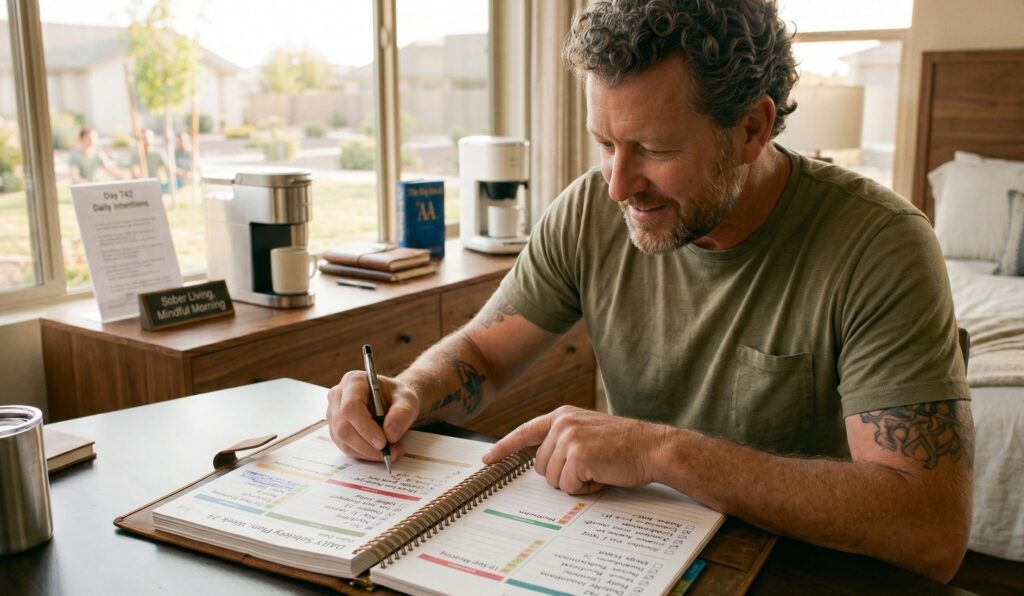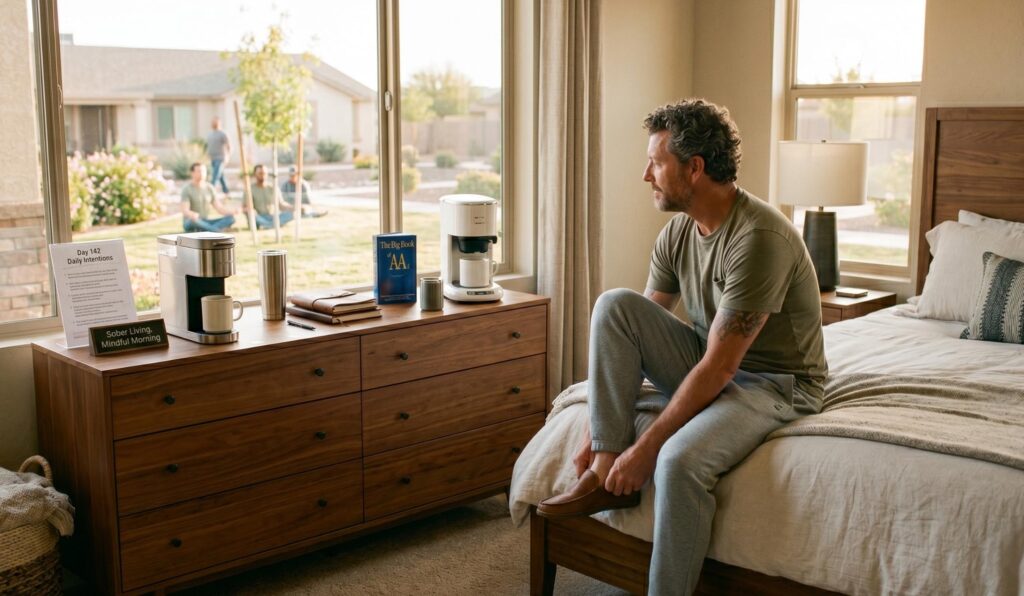

Supportive communities can play an important role in recovery. Connection gives you people to relate to, learn from, and lean on when daily life becomes difficult. It can also provide accountability, encouragement, and a stronger sense of belonging.
Recovery still requires personal effort. No community can make decisions for you or guarantee sobriety. However, living around people who understand recovery can make the process feel less isolating and more grounded in everyday life.
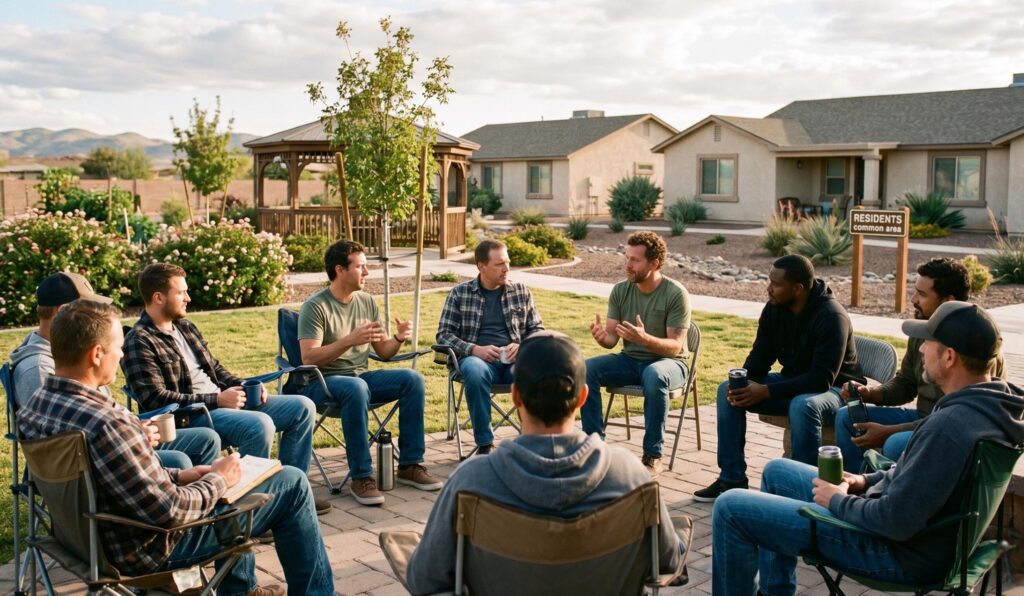
At Sunset Ridge Sober Living, community develops through shared routines, responsibilities, conversations, and experiences. Residents live alongside other men who are also working toward greater stability. Those relationships can strengthen accountability while giving each person room to continue his own recovery journey.
The Importance of Connection
Human connection can affect how supported and understood you feel during recovery. Many people enter this stage of life after relationships have changed, trust has been damaged, or old social circles no longer support sobriety. Rebuilding healthy connections can therefore become an important part of moving forward.
The Substance Abuse and Mental Health Services Administration identifies community as one of the major dimensions that can support recovery. Relationships and social networks can provide friendship, encouragement, and a sense that you are connected to something beyond yourself.
Connection does not mean depending on other people to manage your recovery. A healthy community gives you support while still expecting you to take responsibility for your choices.
Why Isolation Can Become a Problem
Isolation can make difficult situations feel larger. When you spend too much time alone, you may have fewer opportunities to talk through stress, hear another perspective, or recognize changes in your behavior. Small concerns can become harder to address when nobody else knows what is happening.
Recovery can also change your social life. Certain friendships may no longer fit your goals, while other relationships may need time to heal. That can create a period where your old social world is gone but your new one has not fully developed.
A supportive living environment can help fill that gap. You have regular contact with people who understand why sobriety matters and who are also working to build healthier lives.
Building a Healthy Support Network
A strong support network usually includes more than one person or one type of relationship. Different people can offer different forms of support. A sponsor may provide recovery guidance, a therapist may address clinical concerns, family members may offer encouragement, and peers can provide shared understanding.
Healthy support may include:
- Recovery peers who understand similar experiences
- A sponsor, mentor, or trusted recovery contact
- Family members who respect your sobriety
- Friends who support healthy choices
- Professional providers when clinical care is needed
- Community or faith-based connections that fit your values
The goal is not to surround yourself with people at every moment. It is to have reliable relationships you can turn to for perspective, encouragement, and honest feedback.
Shared Experience Can Create Understanding
There is something different about talking with someone who has faced similar challenges. You may not need to explain every feeling or decision because the other person already understands part of the experience.
That shared perspective can make conversations more honest. It may feel easier to admit that you are frustrated, discouraged, or uncertain when you know the person listening has experienced similar moments.
Shared experience can also create hope. Seeing another man handle work, relationships, responsibilities, and recovery can show you what progress may look like in ordinary life.
That does not mean you should copy someone else’s path. Every recovery journey remains personal. The benefit comes from seeing that there are different ways to move forward responsibly.
Community Creates Natural Accountability
Accountability becomes stronger when other people know your goals and see your daily behavior.
In a sober living home, residents notice when someone follows through on responsibilities. They may also notice when routines begin changing. That visibility can encourage greater honesty about how things are going.
Healthy accountability does not mean monitoring or controlling another person. It means living in an environment where actions matter and where people can respectfully call attention to concerns.
At Sunset Ridge Sober Living, accountability works alongside personal responsibility. Residents support one another, but each man remains responsible for his own decisions and recovery.
Healthy Relationships Require Boundaries
Connection is valuable, but healthy relationships also need boundaries.
Recovery may require learning when to say no, when to step away from conflict, and when a relationship is no longer supporting your goals. Some people may respect those boundaries immediately. Others may struggle with them.
Strong boundaries protect your time, energy, and sobriety. They also allow relationships to become more honest because expectations are clearer.
Examples of healthy boundaries may include:
- Avoiding environments centered around alcohol or drug use
- Not lending money you cannot afford to lose
- Limiting contact with people who repeatedly create chaos
- Protecting time for meetings or recovery commitments
- Speaking respectfully during disagreements
- Asking for space when emotions become overwhelming
Boundaries are not about shutting people out. They help create relationships that are safer, clearer, and more respectful.
Trust Develops Through Consistent Actions
Trust rarely returns because of one conversation. It usually grows through repeated behavior.
You show up when you say you will. You keep commitments. You admit mistakes. You communicate clearly. Over time, these actions give other people reasons to trust you again.
Sober living can provide regular opportunities to practice those behaviors. Shared responsibilities, household expectations, and everyday interactions make consistency visible.
You also learn to recognize trustworthy behavior in others. This can help you become more thoughtful about the relationships you choose as your recovery continues.
Brotherhood Is More Than Friendship
Brotherhood in recovery is not simply about getting along.
It involves mutual respect, honesty, shared responsibility, and a willingness to support another person without taking over his life. Sometimes that means encouraging someone after a difficult day. Other times it means speaking honestly when his behavior seems concerning.
A strong community does not require everyone to have the same personality or background. Residents can have different interests, goals, and experiences while still sharing basic expectations around sobriety and respect.
That variety can make the community stronger. You learn how to communicate with different personalities while staying grounded in your own values.
Giving Support Can Strengthen Your Own Recovery
Community is not only about what you receive.
As you become more stable, you may find yourself encouraging someone newer to recovery. You may share a lesson, listen to a concern, or simply model consistent behavior.
Giving support can reinforce your own sense of responsibility. It reminds you that your actions affect the people around you.
However, helping someone does not mean becoming responsible for his outcome. Healthy peer relationships respect individual responsibility. You can care about another resident while still allowing him to make his own decisions.
Learning to Ask for Help
Many men struggle with asking for help, especially when they are used to handling problems alone.
Recovery can require a different approach. Asking for support does not mean giving up responsibility. It means recognizing when another perspective or resource could help you make a better decision.
A supportive community makes that practice easier. You can ask another resident to talk, reach out to a sponsor, or speak with a professional when something falls outside the role of peer support.
The more comfortable you become asking for appropriate help, the easier it may become to respond before a problem grows larger.
Community Can Help You Stay Engaged
Recovery can feel repetitive at times. Meetings, work, routines, and responsibilities may not always feel exciting.
Community can help create engagement during those periods. Shared meals, outdoor activities, conversations, and group experiences provide connection outside formal recovery activities.
These moments matter because recovery also involves learning how to enjoy ordinary life again.
You do not need every social experience to focus on recovery. Healthy connection can simply mean spending time with people who respect the life you are building.
Belonging Can Support Long-Term Stability
Feeling that you belong somewhere can create a stronger sense of stability.
Belonging does not mean everyone agrees with you or that every relationship feels effortless. It means you have a place where your presence matters and where you are expected to participate.
That expectation can be healthy. You contribute to the household. You respect shared spaces. You keep commitments. Other residents do the same.
Over time, those ordinary responsibilities can create a real sense of community rather than simply sharing an address.
Community Should Support Independence
A good recovery community should not make you dependent on it.
The goal is to help you become more capable of building healthy relationships wherever you live. You practice communication, boundaries, accountability, and conflict resolution while living alongside other men.
Eventually, you may move into your own home or another independent setting. The people around you may change, but the relationship skills you developed can remain.
That is why community is valuable beyond sober living. It helps you learn how to create and maintain support systems in everyday life.
Peer Support Has Important Limits
Peers can offer encouragement, shared experience, and accountability. They should not replace professional care when professional care is needed.
A sober living home is not medical detox, residential treatment, therapy, or psychiatric care. Residents may continue using outside services based on their individual needs.
Clear boundaries help protect everyone involved. Another resident can listen to you or share his experience, but he should not diagnose you or attempt to provide clinical treatment.
Knowing when to seek professional help is part of responsible recovery.
Finding a Community That Fits Your Recovery
Not every sober living environment feels the same. House culture, expectations, level of structure, and community dynamics can vary significantly.
Before choosing a home, ask how residents spend their days and what responsibilities they have. Learn how the house approaches accountability, visitors, curfews, employment, meetings, and community participation.
You should also consider how the environment feels. A supportive home should encourage respect, stability, and responsibility without making residents feel controlled.
At Sunset Ridge Sober Living, our North Tustin men’s sober living home is built around structure, accountability, brotherhood, and personal responsibility. Residents share a home while continuing to build their own routines and recovery support systems.
Building Connections That Continue Beyond Sober Living
Some relationships formed in sober living may continue after residents move on. Others may simply teach you what healthy friendship and accountability can look like.
Both outcomes have value.
You may leave sober living with stronger communication skills, better boundaries, and a clearer understanding of the people you want around you. Those lessons can help you build new relationships at work, in recovery communities, and throughout everyday life.
The strongest result is not having one specific group forever. It is becoming capable of creating healthy connections wherever your life takes you.
Moving Forward With Connection and Support
Recovery requires personal responsibility, but it does not require isolation. A healthy community can provide encouragement, accountability, shared experience, and a sense of belonging while you continue doing your own work.
At Sunset Ridge Sober Living, we provide a structured home where men can build healthier relationships while strengthening independence and responsibility. Brotherhood grows through everyday participation, honest communication, and respect for one another’s recovery.
If you are considering sober living for yourself or someone you care about, contact us to ask about house expectations, community life, or current availability. We can help you understand what life at Sunset Ridge Sober Living looks like and whether our home may be a good fit.