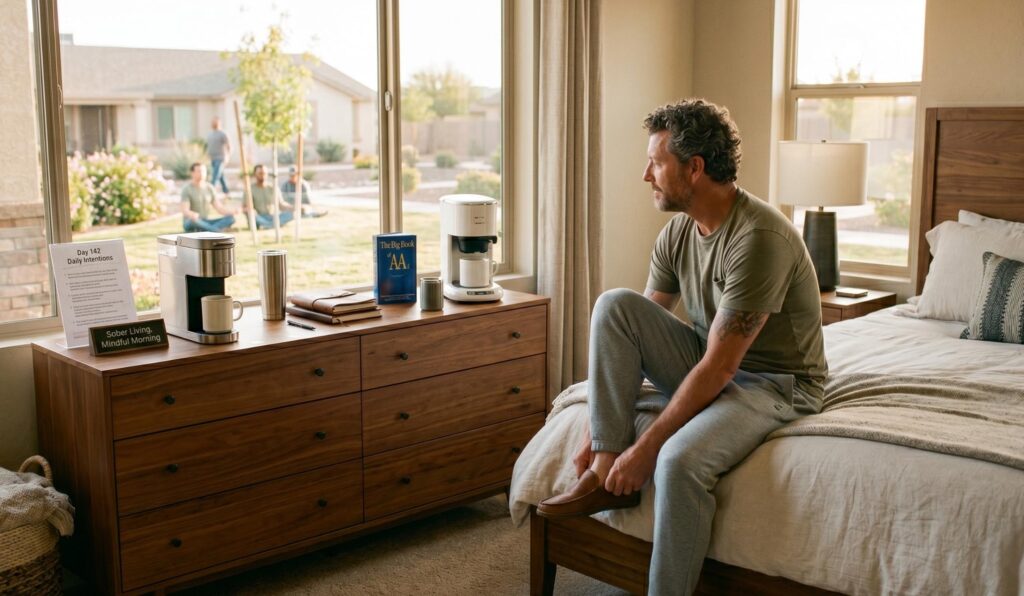

Structured living can help you build the routines, accountability, and personal responsibility needed for long-term recovery. A stable environment gives you space to practice healthier habits while gradually taking greater ownership of daily life.
Recovery involves more than abstaining from alcohol or drugs. It often requires changes in routines, relationships, priorities, responsibilities, and decision-making. The period after formal treatment can be especially important because work, finances, family obligations, meetings, and other responsibilities may return quickly.
A structured sober living home offers a middle ground. You gain greater independence while still living within clear expectations and a substance-free environment. The goal is not to control your life. It is to create enough stability for you to practice living responsibly and build habits you can carry forward.

Why Structure Matters in Recovery
Recovery often involves rebuilding areas of life that became inconsistent or difficult to manage. Sleep schedules may need attention, work habits may require rebuilding, and relationships may need stronger boundaries. Financial and household responsibilities can also return quickly, which makes a predictable daily framework especially valuable.
The Substance Abuse and Mental Health Services Administration describes recovery as a process involving health, purpose, home, and community. Structured sober living can support those areas by giving you a dependable place to live while you strengthen habits and decision-making skills. You still make your own choices, but structure creates clearer boundaries around those choices.
Routine Turns Good Intentions Into Daily Habits
Wanting stability and living consistently are not always the same thing. Long-term change usually develops through repetition. You wake up on time, make your bed, go to work, attend recovery commitments, keep appointments, and contribute to the household.
None of these actions seems dramatic by itself, but together they create a lifestyle. A structured home helps make these behaviors predictable, so you spend less time deciding whether to follow through and more time actually doing it. Over time, routine can begin to feel less like a set of rules and more like a normal way of living.
Accountability Helps Build Personal Responsibility
Accountability is one of the central benefits of structured sober living. You live around other men who also have responsibilities, and your actions affect the community around you. House expectations apply consistently, which creates natural accountability.
Healthy accountability is not about punishment or embarrassment. It means being expected to take ownership of your choices and address problems when they happen. If you make a mistake, you deal with it. If you commit to something, you work to complete it.
That process can strengthen reliability and prepare you for greater independence. Responsibility does not disappear when motivation drops, and sober living gives you repeated opportunities to practice following through anyway.
Clear Expectations Reduce Unnecessary Uncertainty
Too much unstructured time can make healthy habits harder to maintain. Sleep schedules may shift, responsibilities can get delayed, and plans become easier to avoid when every day looks different.
A structured environment gives the day clearer boundaries. House expectations may include curfews, shared responsibilities, recovery-related commitments, communication standards, and respect for common spaces. These guidelines help create consistency for everyone in the home.
Knowing what is expected can make daily life easier to manage. Instead of spending energy guessing what comes next, you can focus on work, relationships, recovery commitments, and personal goals.
Structure Can Support Better Time Management
Learning to manage time is an important part of independent living. Recovery may involve several responsibilities at once, including work, meetings, exercise, family relationships, appointments, and household tasks.
Without planning, those commitments can compete with one another. Structured sober living encourages you to organize your time around priorities and think ahead about what each day requires. You learn when to leave for work, when responsibilities need attention, and how to plan around outside commitments.
These skills transfer directly into independent life. Better time management can also help you use free time more intentionally instead of allowing entire days to disappear without direction.
Household Responsibilities Build Everyday Life Skills
Shared responsibilities are more than chores. They teach consistency, consideration, and participation in a household.
When you live with other people, keeping common areas clean matters. Taking care of your personal space matters. Completing assigned responsibilities matters because other residents depend on everyone doing his part.
These tasks reinforce a basic principle: stability requires participation. Independent living works the same way, because bills need payment, laundry needs doing, groceries need buying, and homes require regular attention. Structured sober living gives you a place to practice those responsibilities until they become part of normal life.
A Stable Home Can Support Recovery Goals
Your living environment affects what happens around you every day. A chaotic home can create unnecessary stress, while unpredictable relationships or easy access to substances may work against recovery goals.
A sober living home creates a different environment. Residents agree to live within a substance-free community, and house expectations help protect stability. Shared goals also create a clearer sense of direction.
This does not remove every challenge from recovery. Stress and difficult situations still happen. The difference is that you return to a home built around sobriety, responsibility, and mutual respect, which can make it easier to stay connected to the lifestyle you are trying to build.
Structured Living Encourages Healthy Independence
Good sober living should not create dependence on the house. Its purpose is to help you become more capable of managing your own life.
You gradually practice making decisions while remaining responsible for the consequences. You manage your schedule, participate in work or another productive activity, maintain outside recovery support, and handle personal responsibilities. The home provides structure, but you do the work.
That distinction matters because long-term recovery requires responsible decisions when nobody is standing beside you. Structured living gives you repeated opportunities to practice those decisions before moving into a more independent environment.
Learning How to Handle Freedom Responsibly
Freedom can feel different after treatment because you may suddenly have more choices about where you go, who you spend time with, and how you organize your day. That independence can feel positive, but it also requires judgment and self-control.
Structured sober living creates boundaries while still allowing meaningful choices. You can work, pursue goals, build relationships, and participate in outside recovery activities while following house expectations.
This balance teaches an important lesson. Independence does not mean living without boundaries. Healthy independence means making responsible decisions within the realities of adult life.
Structure Can Help You Recognize Patterns
Consistent routines make patterns easier to see. If your schedule changes constantly, you may not notice which habits help you feel stable or which behaviors create unnecessary stress.
Structure gives you a baseline. You may notice that enough sleep improves your mornings, that exercise helps you manage stress, or that procrastination creates problems later in the week. Those observations can help you understand yourself more clearly.
Instead of reacting to each day, you can begin adjusting your routine with greater intention. That kind of self-awareness can remain useful long after sober living ends.
Community Adds Another Layer of Stability
Structure works differently when you share it with other people. You are not the only person waking up, working, completing responsibilities, or staying connected to recovery. Other men are doing the same work beside you.
That shared experience creates community and natural accountability. Residents can encourage one another when motivation drops, model healthier behavior, and notice when someone begins pulling away from his normal routine.
At Sunset Ridge Sober Living, we place a strong emphasis on accountability, brotherhood, respect, and participation. You are expected to contribute to the home while remaining responsible for your own recovery. That combination gives structure a practical purpose.
Structure Should Grow With You
Recovery is not static, and your responsibilities may change as stability increases. You may take on more hours at work, return to school, rebuild family responsibilities, or become more focused on financial goals.
A productive sober living experience should help prepare you for those changes. The objective is not to keep your life small or overly controlled. It is to help you develop enough consistency that you can take on more responsibility without losing the routines that support you.
Growth should eventually lead toward greater independence. Structure should help you move forward, not keep you in the same place.
Preparing for Life After Sober Living
The habits you build in sober living become most valuable when you can carry them into the next stage of life. Eventually, you may live independently, with family, or with roommates, and the external structure of the sober home will no longer guide each day.
Your personal structure becomes more important at that point. That may include keeping a regular sleep schedule, attending recovery meetings, staying connected to supportive people, working consistently, exercising, managing money, and keeping commitments.
The transition can feel more manageable when these behaviors already feel familiar. Instead of creating an entirely new lifestyle after sober living, you continue practicing the one you have already started building.
Structured Sober Living Is Not Addiction Treatment
It is important to understand what structured sober living does and does not provide. A sober living home is not medical detox, residential addiction treatment, therapy, or psychiatric care.
Instead, sober living focuses on the daily living environment. You have a substance-free home, follow household expectations, live alongside other men working toward similar goals, and practice accountability and personal responsibility.
Residents may continue using outside professional services based on their individual needs. Keeping these roles clear helps you choose the level of support that fits where you are in recovery.
Finding the Right Balance of Structure and Independence
The most useful structure gives you direction without taking responsibility away from you. Too little structure can make old patterns harder to notice, while too much control can prevent you from practicing independent decision-making.
Sober living should create a workable balance. At Sunset Ridge Sober Living, we provide a structured environment where men can continue building routines, meeting responsibilities, and strengthening accountability. You can learn more about our North Tustin men’s sober living home and the environment we have created.
The goal is forward movement. Structure provides the framework, but your choices determine how you use it.
Building Stability One Day at a Time
Long-term recovery rarely depends on one major decision. It grows through smaller choices repeated consistently. You get up, follow through, keep commitments, communicate clearly, and participate in daily life.
When something goes wrong, you address it and continue moving forward. Structured sober living gives you a place to practice those behaviors until they become more familiar and more natural.
At Sunset Ridge Sober Living, we believe structure works best when it supports responsibility, community, and growing independence. If you are considering sober living for yourself or someone you care about, contact us to ask about availability, house expectations, and daily life at Sunset Ridge Sober Living.