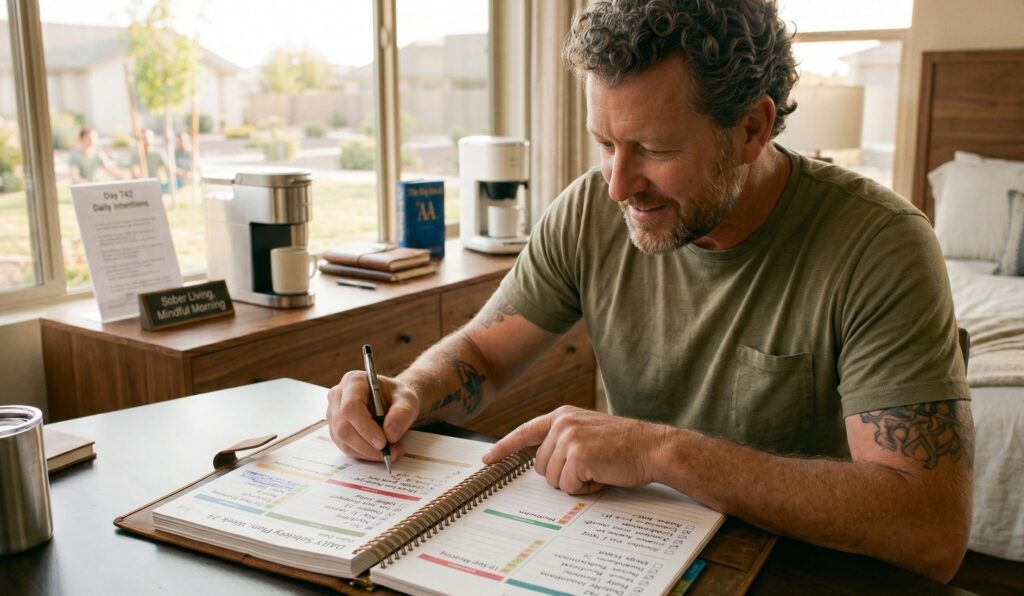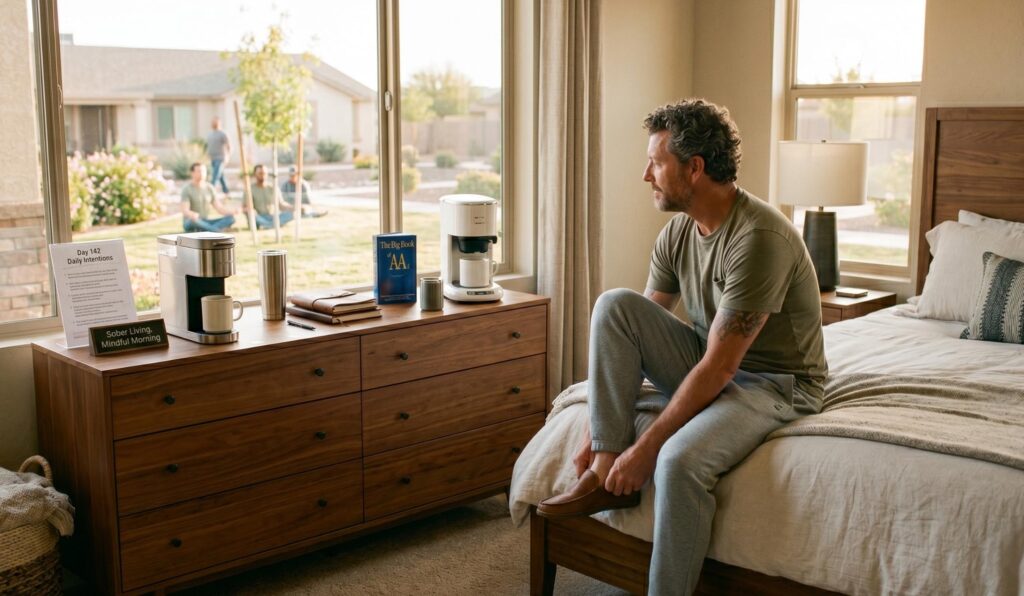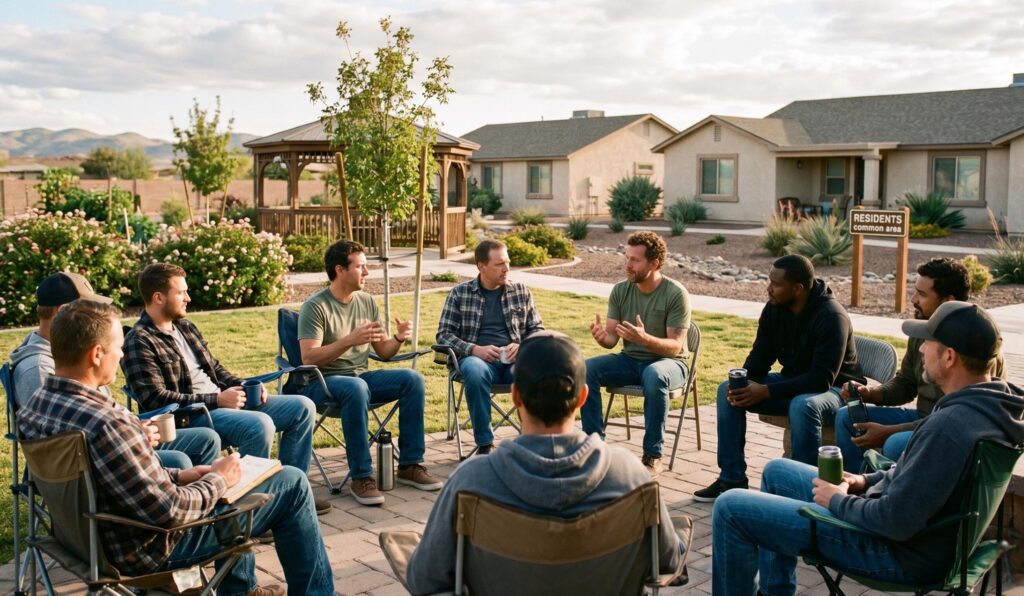

Peer support can become one of the strongest parts of recovery. It gives you connection, encouragement, perspective, and daily accountability. Those things matter when you are rebuilding routines, strengthening responsibility, and learning how to live differently.
Recovery requires personal effort, but that does not mean doing everything alone. Isolation can make difficult moments harder to manage, while a healthy community gives you people who understand the work involved and respect the direction you are trying to take. Sober living creates opportunities for that connection to develop naturally through shared meals, conversations, activities, and everyday responsibilities.
At Sunset Ridge Sober Living, we believe peer support works best alongside structure and accountability. Each resident remains responsible for his own recovery, while the community provides encouragement and shared understanding. That balance helps create an environment where men can support one another without losing sight of personal responsibility.

Why Peer Support Matters in Recovery
Peer support comes from people who understand recovery through lived experience. That shared perspective can create a different kind of connection than support from family, friends, or professionals. You may not need to explain every part of what you are experiencing because another person in recovery may already understand the frustration, uncertainty, or pride that can come with rebuilding your life.
The Substance Abuse and Mental Health Services Administration describes peer support as a valuable part of recovery. Shared understanding, respect, and encouragement can help people stay connected to their recovery goals while building greater confidence and responsibility. Peer relationships can also provide perspective when someone else notices progress, patterns, or concerns that may be harder to see on your own.
The goal is not to have another person manage your recovery. Healthy peer support should encourage you to take greater ownership of your decisions while knowing that support is available when you need it.
Shared Experience Can Reduce Isolation
Many people enter recovery after spending significant time disconnected from others. Relationships may have changed, trust may need rebuilding, and old social circles may no longer support the life you want. That can create a period where you feel caught between the life you are leaving and the one you are trying to build.
A sober community gives you a place to practice connection again. Living alongside other men with similar goals creates regular opportunities to talk, listen, solve problems, laugh, and participate in everyday life. These ordinary interactions can help reduce isolation and make it easier to feel part of something.
Connection can also make honesty feel safer. You can talk about stress, setbacks, uncertainty, and progress without feeling pressure to pretend everything is going perfectly. Over time, that openness can strengthen communication skills and help you build healthier relationships outside the home as well.
Accountability Becomes Part of Daily Life
Peer support naturally creates accountability because other residents see how you handle responsibilities and commitments. In sober living, you are surrounded by men who are also working toward greater stability, which means your choices become part of a shared environment.
Healthy accountability is not about policing another person. It is about living in a community where actions matter and where people can respectfully notice when something changes. Sometimes accountability means encouragement, while other times it may mean hearing something you would rather avoid.
Both can support growth when they are handled with respect. A strong peer community allows men to challenge one another without humiliation or shame, while still reinforcing honesty, consistency, and personal responsibility.
Peer Support Helps You Practice Healthy Relationships
Recovery often involves more than stopping substance use. It can also involve learning healthier ways to communicate, set boundaries, resolve disagreements, and participate in relationships. Sober living provides a practical environment where those skills can be practiced every day.
You share common areas, participate in household responsibilities, and learn how to respect both personal and shared space. You may also need to address conflicts, ask for help, or recognize when another person needs room to handle something on his own.
These situations may seem small, but they build important life skills. Healthy relationships require patience, reliability, honesty, and communication. Sober living gives you repeated opportunities to practice each one in real situations rather than only talking about them in theory.
Encouragement Can Strengthen Motivation
Motivation naturally changes during recovery. Some days may feel productive and hopeful, while others may feel frustrating, repetitive, or slow. Long-term progress rarely comes from feeling highly motivated every morning.
This is where community can help. Seeing another resident stay committed to work, meetings, exercise, or household responsibilities can remind you to stay connected to your own routine. Watching someone reach an important milestone can also show you what consistent effort looks like over time.
Your progress may encourage others as well. Peer encouragement does not remove responsibility, but it reinforces the idea that progress comes from repeated choices. Showing up, following through, and returning to your routine after a difficult day all matter.
Learning From Other Men in Recovery
Every resident brings different experiences, strengths, and lessons into a sober living community. One person may have learned how to rebuild family relationships, while another may understand how to balance recovery with employment. Someone else may have developed strong routines around exercise, meetings, or personal goals.
Being around other men gives you access to those perspectives. You can learn from what worked for someone else without assuming his path must become yours. Recovery remains personal, but shared experience gives you more examples, ideas, and lessons to consider.
That exchange also works both ways. As you become more stable, your experience may help someone newer to the process. Offering encouragement or perspective can strengthen your own sense of responsibility while helping create a stronger sense of brotherhood in the home.
Community Can Help Build Confidence
Confidence often returns through action. Keeping commitments, handling conflict respectfully, showing up for work, and completing household responsibilities all create evidence that you can depend on yourself.
A supportive community gives other people the chance to recognize that progress too. Someone may notice that you communicate differently, follow through more consistently, or handle stressful situations with greater patience than you did before.
That feedback can be meaningful because it reflects real behavior rather than empty reassurance. Confidence in recovery should not come from believing challenges are gone. It grows from recognizing that you can respond to those challenges in healthier and more responsible ways.
Structure Makes Peer Support More Effective
Community alone is not enough. A healthy sober living environment also needs clear expectations, boundaries, and shared responsibilities. Structure gives peer relationships a stronger foundation because residents understand what is expected of them and what they can expect from one another.
When household responsibilities and expectations are clear, the home becomes more predictable. That stability can help trust develop because residents know that everyone is expected to contribute and respect the shared environment.
At Sunset Ridge Sober Living, structure, accountability, brotherhood, and personal responsibility work together. You are still responsible for your choices, but the environment gives you a place to practice those choices alongside men who value the same direction. You can learn more about our approach to Orange County men’s sober living and what life at Sunset Ridge looks like.
Friendships Can Extend Beyond Sober Living
Some relationships formed in sober living continue long after residents move forward. That can be valuable because recovery does not stop when someone leaves the home. Jobs change, relationships develop, and new responsibilities appear over time.
Having people who understand your history and respect your goals can provide perspective during those changes. Not every relationship will become a lifelong friendship, and that is not the purpose of sober living.
The greater benefit comes from learning how to build healthy connections. You practice being dependable, supporting others without taking responsibility for their recovery, and asking for help when you need it. Those relationship skills can continue serving you wherever life takes you next.
Peer Support Does Not Replace Professional Care
Peer support can provide companionship, shared experience, encouragement, and accountability, but it has important limits. A sober living home is not a replacement for medical care, therapy, detox, addiction treatment, or other clinical services when those services are needed.
Residents may continue participating in outside recovery or professional services based on their individual needs. Peers should not try to diagnose, treat, or manage one another’s clinical concerns.
Keeping those roles clear helps protect healthy relationships. You can support another person without becoming responsible for his recovery, and you can receive support while continuing to take ownership of your own decisions.
Building a Stronger Recovery Through Brotherhood
Recovery takes personal commitment, but connection can make that commitment stronger. Peer support gives you opportunities to learn from other men, practice accountability, build healthier relationships, and recognize your own progress.
At Sunset Ridge Sober Living, we provide a structured men’s sober living home built around accountability, respect, community, and personal responsibility. You live alongside men who are also working toward greater stability while remaining responsible for your own recovery journey.
If you are considering sober living for yourself or someone you care about, you can contact us to ask about availability, house structure, or what to expect. We are happy to answer your questions and help you decide whether Sunset Ridge Sober Living may be a good fit.