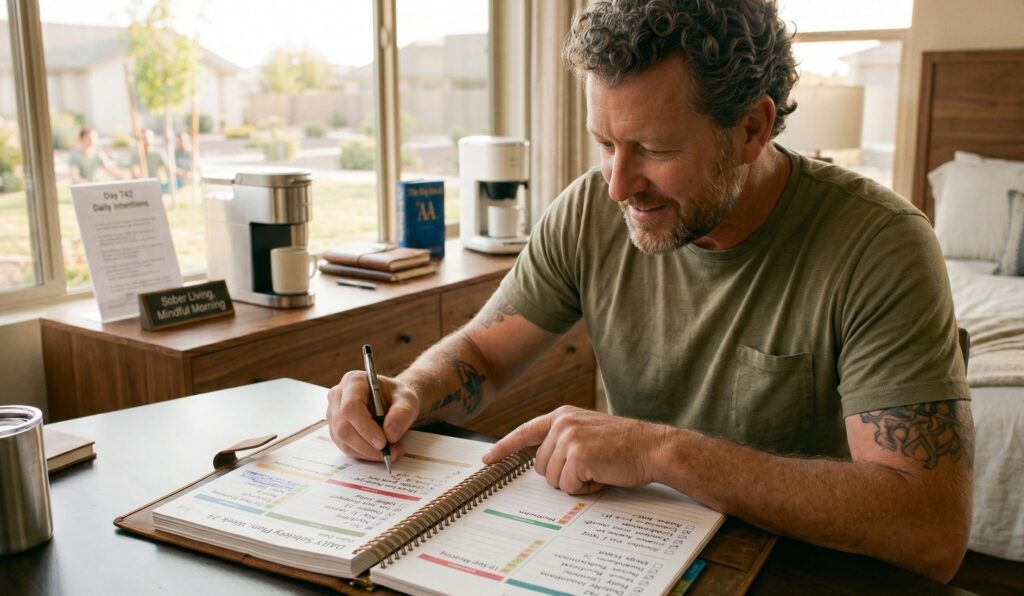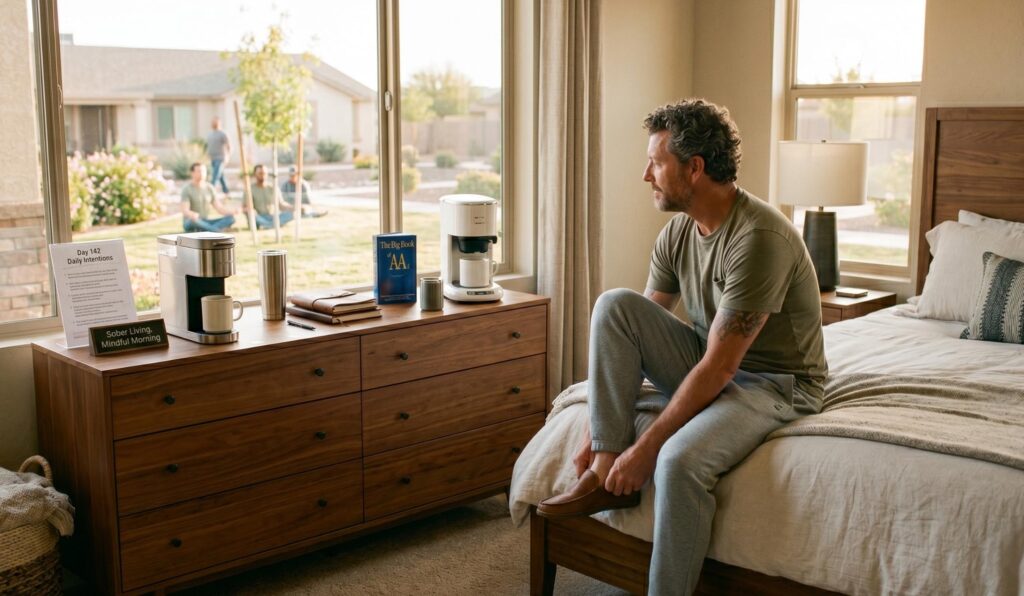

A transitional sober living home provides a structured, substance-free place to live while you continue building independence. It can help you move from the structure of treatment into everyday life with greater accountability, stability, and community support.
This stage of recovery often comes with new responsibilities. You may return to work, rebuild relationships, manage finances, attend outside recovery services, and make more decisions independently. Those responsibilities can feel different when the structure of a treatment program is no longer surrounding you.
Sober living provides a middle ground. You have more freedom to manage your own life, but you still live within clear house expectations. You also share the home with other men who are working toward sobriety and greater stability.
At Sunset Ridge Sober Living, we view transitional sober living as a place to practice responsible daily living. The home provides structure and community, while each resident remains active in his own recovery.

What Is a Transitional Sober Living Home?
A transitional sober living home is a substance-free residence for people who are continuing their recovery. It is generally designed to provide greater independence than a treatment setting while maintaining clear expectations around sobriety, responsibility, and participation in the household.
The Substance Abuse and Mental Health Services Administration describes recovery housing as a recovery support service designed to provide safe and supportive living environments for people working to initiate or sustain recovery. Recovery residences can differ in structure and services, but stable housing, peer support, and accountability commonly play important roles.
Transitional sober living does not mean someone else manages every part of your day. The purpose is to give you enough structure to support responsible choices while you continue developing the skills needed for independent life.
Sober Living Is Different From Treatment
One of the most important things to understand is that sober living is not the same as addiction treatment. A sober living residence does not replace medical detox, inpatient treatment, outpatient care, therapy, psychiatric services, or other professional care when those services are needed.
Instead, the focus is on the living environment. You have a sober home, clear expectations, shared responsibilities, and a community of people pursuing similar goals. Residents can continue participating in outside services based on their individual recovery plans.
That distinction gives residents room to practice independence. You may be responsible for scheduling appointments, arranging transportation, attending outside meetings, working, and managing your personal commitments.
You Can Expect a Substance-Free Home
Sobriety forms the foundation of a sober living environment. Residents are expected to avoid alcohol and non-permitted drug use while living in the home. Clear expectations help protect the stability of the community and give residents a living environment aligned with their recovery goals.
Individual homes may use different policies to support these expectations. Before moving into any sober living residence, you should understand the house rules and what happens if a concern arises.
A substance-free environment cannot remove every challenge from recovery. It does reduce one major source of instability by creating a home where alcohol and drug use do not form part of everyday life.
House Rules Create Predictability
Transitional sober living typically includes rules that help create a stable household. These expectations are not meant simply to restrict residents. They provide boundaries that allow several people to share a home while working toward similar goals.
Depending on the residence, expectations may address:
- Curfews and overnight policies
- Substance-free living requirements
- Household responsibilities and chores
- Visitors and guests
- Respect for shared spaces
- Recovery-related commitments
- Employment, education, or productive daily activity
- Communication with house leadership
Knowing these expectations before moving in helps you decide whether the home fits your needs. Clear rules also reduce confusion because residents understand what the community expects from them.
Daily Life Includes Personal Responsibility
Sober living usually requires residents to manage more of their own lives than they did in treatment. You may wake yourself for work, schedule appointments, prepare meals, manage transportation, and keep track of recovery commitments without someone directing each step.
These responsibilities are part of the transition.
Handling ordinary tasks can rebuild confidence because you see yourself following through. You begin learning how to organize a week, make decisions, and deal with consequences while still living within a supportive environment.
The goal is not to remove responsibility. It is to give you a stable place to practice it.
You Will Share Responsibilities With Other Residents
Living in a sober home means participating in a household. Residents generally have responsibilities for their own spaces and may also contribute to common areas.
Shared responsibilities can include cleaning, taking out trash, maintaining common rooms, helping with meals, or completing other household tasks. These expectations encourage participation and reinforce the idea that everyone contributes to the environment.
Household responsibilities also prepare you for independent living. Rent, laundry, groceries, cleaning, and basic home maintenance do not disappear when sober living ends. Practicing consistency with these tasks can make the eventual transition easier.
Your Schedule May Become More Independent
Treatment programs often organize much of the day. Transitional sober living typically gives you greater responsibility for building your own schedule.
That freedom may include managing:
- Work or school
- Recovery meetings
- Therapy or outside services
- Exercise and recreation
- Household responsibilities
- Family commitments
- Appointments and errands
- Personal downtime
Learning to balance these responsibilities can become an important part of recovery. Instead of relying entirely on external structure, you begin creating personal structure that can follow you into independent life.
Employment and Productive Activity Often Matter
Work can provide more than income. It can create routine, responsibility, purpose, and opportunities to rebuild confidence.
Some residents may already have jobs when they enter sober living. Others may need time to find employment, return to school, volunteer, or pursue another productive goal that fits their circumstances.
The specific path can vary, but forward movement matters. Transitional sober living works best when residents are actively building a life rather than simply passing time.
Managing work alongside household expectations and recovery commitments also provides practical preparation for independent living.
Recovery Support Continues Outside the Home
Sober living is one part of a broader recovery process.
Residents may continue attending mutual-support meetings, working with sponsors, participating in outpatient programs, seeing therapists, or using other community resources. The appropriate combination depends on each person’s needs and recovery plan.
A sober living home can support these commitments by providing a stable place to return to afterward. However, the home itself should not be confused with the professional or clinical services residents may receive elsewhere.
Maintaining outside support can also help residents develop a recovery network that remains available after sober living ends.
Community Becomes Part of Everyday Life
Living with other men means community is not limited to scheduled activities.
Conversations happen while making coffee, preparing meals, relaxing after work, completing chores, or spending time outside. These everyday interactions can help residents build trust and become more comfortable connecting with other people.
Community can also reduce isolation. If you have spent significant time withdrawing from others, learning how to participate in a healthy household can become meaningful practice.
At Sunset Ridge Sober Living, brotherhood does not mean everyone must become best friends. It means residents share a commitment to respect, accountability, and maintaining a stable home.
Peer Accountability Can Be Direct
Living around other people makes behavior more visible. Residents notice whether someone participates in the household, keeps commitments, or begins withdrawing from normal routines.
That can create useful accountability.
A peer may encourage you after a difficult day or ask how you are doing when something seems different. You may eventually offer the same support to another resident.
Healthy accountability should remain respectful. The goal is not to shame or control someone. It is to create a community where people can be honest with one another while maintaining responsibility for their own decisions.
You Will Still Have Privacy and Personal Space
Community matters, but so does having room to decompress.
A comfortable sober living environment should provide opportunities for both connection and personal time. You may spend time talking with other residents in common areas, then step away when you need quiet.
This balance can help you learn how to participate in relationships without feeling that you must always be social. Healthy independence includes knowing when connection helps and when you need appropriate personal space.
At Sunset Ridge Sober Living, comfortable bedrooms and shared living spaces create opportunities for both.
Expect to Practice Communication
Shared living naturally creates moments when people disagree.
Someone may leave a common area untidy. Schedules may conflict. Personalities can differ. These situations give residents opportunities to practice communication rather than avoiding every uncomfortable conversation.
Learning to address problems respectfully can support recovery and independence. You practice explaining concerns, listening to another person, setting boundaries, and taking responsibility when you are wrong.
These are practical skills that continue to matter in family relationships, workplaces, friendships, and future housing situations.
You May Need to Rebuild Trust Gradually
Recovery can involve repairing trust with family members, employers, friends, or yourself.
Sober living does not rebuild that trust automatically. Consistent behavior can.
Showing up for work, keeping appointments, communicating clearly, following house expectations, and handling responsibilities create evidence of change. Over time, those repeated actions may help restore confidence in your ability to manage daily life.
Trust usually develops through consistency rather than promises. Transitional sober living gives you regular opportunities to practice that consistency.
Comfort Can Support Stability Without Removing Accountability
A sober living home does not need to feel institutional to provide structure.
A clean, peaceful, and comfortable environment can make daily life more manageable. Residents can focus on work, routines, outside recovery support, and personal goals without living in unnecessary chaos.
At Sunset Ridge Sober Living, the home provides comfortable spaces for daily living, connection, and reflection. We believe a refined environment should support recovery without distracting from the responsibilities that make sober living effective.
Comfort is part of the setting. Accountability remains part of the work.
You Can Expect Both Freedom and Boundaries
Transitional sober living sits between highly structured care and complete independence.
You have freedom to make many everyday decisions. You may work, attend meetings, exercise, see approved visitors, pursue hobbies, and handle your own schedule.
At the same time, the house maintains boundaries designed to protect stability. Residents are still expected to follow rules, communicate responsibly, and respect the community.
Learning to manage freedom within reasonable boundaries can be valuable preparation for independent living. Adult life always includes responsibilities, even when nobody is directly supervising you.
Progress Will Look Different for Each Resident
Not everyone enters sober living at the same point.
One resident may already have stable employment and strong outside support. Another may be rebuilding his schedule, reconnecting with family, or learning how to manage basic responsibilities again.
Comparing your progress too closely with someone else’s can become distracting.
A healthier approach is to focus on your own responsibilities and goals while learning from the people around you. Community creates opportunities for encouragement without requiring everyone to follow the same timeline.
Transitional Living Should Prepare You to Move Forward
A sober living home is not intended to prevent independence.
It should help you prepare for it.
As your stability increases, you can practice managing more responsibilities. You may save money, strengthen employment, improve time management, build stronger recovery connections, and develop routines that will continue after you leave.
The structure of the home serves as practice. Eventually, you should be able to create much of that structure for yourself.
Questions to Ask Before Choosing a Sober Living Home
Homes can differ significantly, so asking practical questions before moving in matters. You should understand more than what the bedrooms look like.
Consider asking:
- What are the house rules and curfew expectations?
- How are household responsibilities handled?
- What recovery activities are expected?
- Are residents expected to work or attend school?
- How are visitors handled?
- What happens if a resident violates house expectations?
- How does the home encourage accountability?
- What does a typical weekday look like?
- How much independence do residents have?
- What should I bring when I move in?
Clear answers can help you understand the culture of the home before making a decision.
What Transitional Sober Living Looks Like at Sunset Ridge
At Sunset Ridge Sober Living, we provide an independent, owner-operated men’s sober living residence built around structure, accountability, brotherhood, and personal responsibility.
Our North Tustin men’s sober living home provides a peaceful setting where residents can continue building routines while managing the responsibilities of everyday life. Shared spaces encourage connection, while comfortable personal areas provide room to recharge and reflect.
Residents remain responsible for participating actively in their own recovery. We provide the environment and expectations that help support that work.
Moving Forward With Greater Independence
A transitional sober living home can give you time to practice life before returning to complete independence. You can strengthen routines, manage responsibilities, build healthier relationships, and remain connected to recovery support within a stable substance-free environment.
The most important part is what you do with that opportunity. Structure can provide direction, but your choices, participation, and follow-through create progress.
If you are considering Orange County men’s sober living for yourself or someone you care about, you can contact us to ask about availability, house expectations, or daily life at Sunset Ridge Sober Living. We can answer your questions and help you understand whether our home may fit the next stage of your recovery.