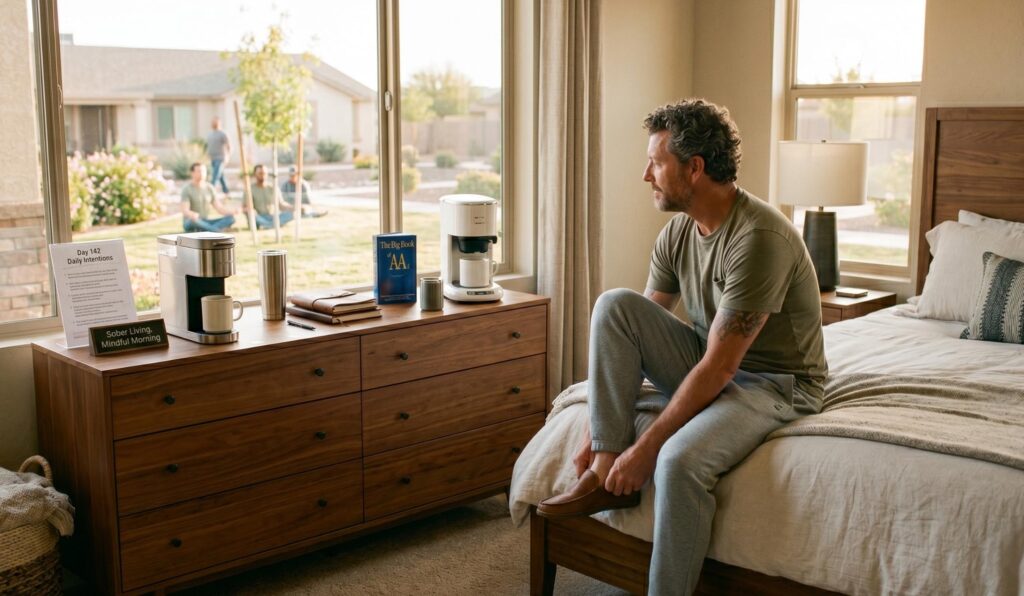

Recovery does not end when treatment is over. For many people, the next step is learning how to live a healthy, sober life while managing everyday responsibilities again. That transition can feel challenging. Returning to old environments, routines, or influences may make it harder to stay focused on long-term goals. A sober living home offers a place where you can continue building stability while living alongside others who are working toward the same purpose.
So, what is sober living? A sober living home is a structured, substance-free residence where people can continue building stability during recovery, often after treatment or while participating in outside recovery services. It is not a treatment center or hospital. Instead, it provides a supportive home environment with house expectations, accountability, and a community of peers who encourage one another. Residents continue practicing healthy habits while preparing for greater independence.
If you’re considering sober living, you probably have questions about what daily life looks like, how long you can stay, and whether it is the right choice for your situation. The sections below explain how sober living works and why many people choose this type of supportive environment as part of their recovery journey.

How Does Sober Living Work?
A sober living home gives you the opportunity to practice recovery in a real-world setting while still benefiting from structure and accountability. The Substance Abuse and Mental Health Services Administration recognizes recovery housing as a supportive living environment that can help people initiate or sustain recovery.
You live with other residents who share similar goals, creating a community where everyone works together to maintain a safe and substance-free environment. That shared commitment can make daily life more predictable while giving you room to make your own decisions.
Most sober living homes have clear house guidelines designed to support stability. Residents are typically expected to remain sober, participate in household responsibilities, respect quiet hours, and follow other community expectations. Many homes also encourage attendance at recovery meetings, maintaining employment or education, and building healthy daily routines.
Daily life often feels similar to living in a regular home, but with added accountability. You prepare meals, manage personal responsibilities, and spend time in shared living spaces while continuing to strengthen the habits that support long-term recovery. This balance between independence and structure helps many people rebuild confidence before living completely on their own.
What’s the Difference Between Sober Living Homes and Rehabs?
Although people sometimes confuse the two, sober living homes and rehab programs serve different purposes. Rehab focuses on treatment. Depending on your needs, treatment may include medical care, counseling, therapy, and clinical support for substance use disorders.
A sober living home may begin after treatment or alongside ongoing outpatient care. The focus shifts from clinical services to everyday living. Instead of receiving intensive treatment throughout the day, you concentrate on maintaining sobriety while returning to work, school, family responsibilities, or other parts of daily life.
The environment is also different. A sober living home functions like a residence where everyone shares responsibility for maintaining a healthy, respectful community. House expectations, peer support, and personal accountability become important parts of daily life as you continue moving forward in recovery.
What Are the Benefits of Sober Living Compared With Returning Home?
Returning home after treatment may not always provide the structure or support you need during early recovery. A sober living home offers a stable environment where you can continue building healthy habits while preparing for greater independence. Here are some of the biggest advantages.
- A Structured Daily Routine
Living in a sober home encourages consistent habits through house expectations, shared responsibilities, and healthy routines. Structure helps you stay focused on recovery while rebuilding confidence in daily life. - Built-In Accountability
Everyone in the home follows the same expectations for maintaining a sober lifestyle. This shared commitment encourages personal responsibility and helps you stay accountable to your goals. - Peer Support Every Day
You live with other men who understand the challenges of recovery because they are on similar journeys. Everyday conversations and shared experiences can provide encouragement when you need it most. - Fewer Triggers and Negative Influences
A sober living home creates distance from environments or situations that may have contributed to substance use. A stable, substance-free setting allows you to focus on building healthier patterns. - A Better Transition to Independent Living
Instead of moving directly from treatment to complete independence, you have time to strengthen life skills, maintain employment or school, and build routines that support long-term stability.
How Long Can I Stay in a Sober Living House?
There is no single answer because every person’s recovery journey is different. Some residents stay for only a few months, while others remain longer as they strengthen routines, employment, finances, and personal goals.
Length of stay varies by residence. Some homes offer flexible stays based on house policies, personal progress, and readiness for greater independence. The right timeline depends on your circumstances, the expectations of the home, and whether the environment continues to support your progress.
Rather than focusing only on a deadline, it is often more helpful to focus on readiness. Recovery is not a race. Taking enough time to build healthy habits, strengthen accountability, and develop confidence can help create a stronger foundation for long-term stability.

Building a Strong Foundation for Long-Term Recovery
Sober living is more than simply having a place to stay. It gives you the opportunity to practice recovery while building healthy routines that become part of everyday life. A structured environment, shared accountability, and support from peers can help you develop greater confidence as you work toward lasting independence.
Every person’s path is different, but having the right environment can make the transition from treatment to everyday living feel more manageable. The goal is not to remove responsibility. It is to provide a stable place where you can practice handling it.
If you’re looking for a structured men’s sober living home where accountability, community, and respect are part of daily life, Sunset Ridge Sober Living provides a safe and supportive place to continue your recovery journey. Our independent, unaffiliated, and owner-operated home offers comfortable living, clear expectations, and a community of men committed to long-term sobriety.
Contact us to learn more about availability or schedule a tour to see if Sunset Ridge Sober Living is the right fit for your next step.